
Lifestyle Guide
Why Vegan? Bamboo vs Plastic: The Hidden Microplastic Crisis
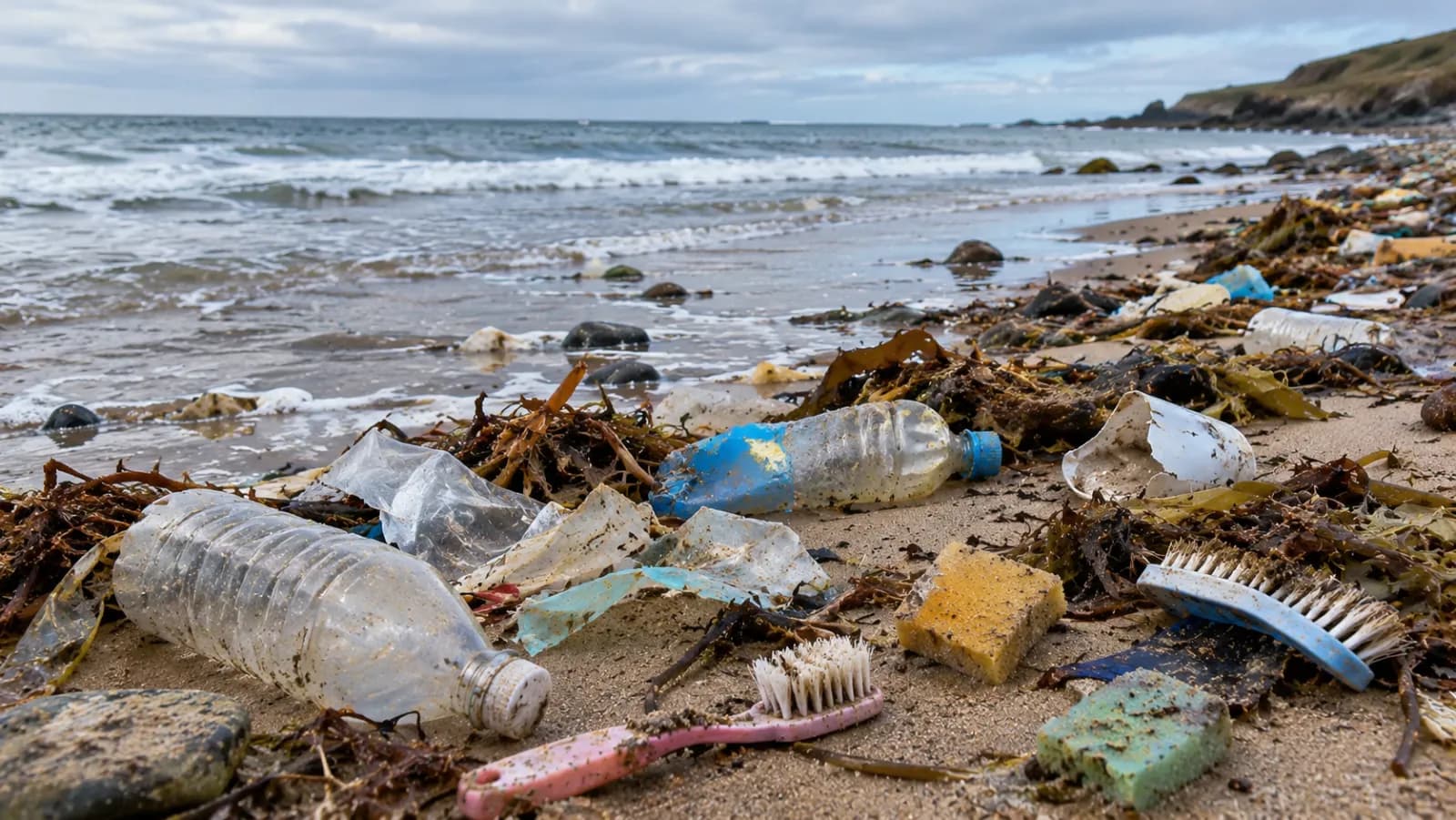
The Hidden Plastic in Your Kitchen
Your kitchen sponge is a quiet source of microplastic. Every time you wash dishes with that bright yellow scrubber, you're releasing thousands of plastic particles into your dishwater, and onto the plates that go back into your cabinet.
Tiny pieces of plastic now turn up in food, water and air, and we take some in every day. Some of that comes from bottled water; some from packaged food; a meaningful share comes from the objects you scrub, slice, and eat from every day.
One swap, sponge → loofah, removes a daily source of microplastic from your kitchen.
This guide is the "why now" behind the swap. If you already know you want out of the plastic cycle, skip to the Plastic-Free Morning Routine for the concrete step-by-step. If you want to understand what you're actually choosing between, read on.
The "Eco" Bamboo Traps
"Bamboo" has become shorthand for "eco-friendly" in a way that's mostly marketing, sometimes true, and occasionally a trap. Three traps worth knowing:
Trap 1: Boar-Hair Bristles
Many bamboo-handled brushes, especially cheaper "eco" dish brushes and body brushes, use boar hair bristles. The bamboo looks vegan; the bristles come from slaughtered pigs. The product line reads "natural" without ever saying "vegan."
What to look for instead: sisal (an agave-plant fiber) or BPA-free nylon. Both are clearly labeled on brands that care.
Trap 2: Formaldehyde-Based Glues
Cheap bamboo cutting boards and utensils are often assembled with formaldehyde-urea glues, the same adhesive family used in low-grade plywood. It off-gasses into your food, especially when the bamboo gets wet or hot.
What to look for instead: food-grade adhesives (PVA, soy-based, or none: some boards are single-piece). Brands that use food-safe glue will say so explicitly.
Trap 3: "Compostable" That Isn't
Not all bamboo composts in your backyard. "Bamboo fiber" cups and plates are often bamboo powder bound with melamine plastic resin. They behave like plastic in landfill, and hot or acidic food can draw chemicals out of the resin; the EU does not allow bamboo powder in plastic food contact items. For food, choose solid bamboo. True compostability requires untreated bamboo OR clearly labeled industrial-compost certification.
A "bamboo" product is only as good as its bristles, its glue, and its finish. Two out of three isn't enough.
What True Bamboo Looks Like
Strip the marketing and the actual standard is short. Four things to verify:
1. FSC certification: Forest Stewardship Council certification means the bamboo came from responsibly managed sources. "FSC 100%" means all of it; "FSC Mix" means certified material blended with controlled or recycled material. Bamboo grows fast and doesn't require replanting, but unregulated plantations can still displace native ecosystems. FSC is the most rigorous mark.
2. Bristle source is labeled: sisal (agave fiber) or BPA-free nylon. If a bamboo brush doesn't tell you what the bristles are, assume animal-derived until proven otherwise.
3. Food-grade finish: non-formaldehyde glues, non-toxic coatings, or untreated wood. Brands that use food-safe glue will state it on the packaging or product page.
4. Real compostability: untreated bamboo can compost in a home composter; how fast depends on your compost. Mixed-material "bamboo fiber" products (often with melamine or plastic resin) do not. Check the label.
"FSC + sisal + food-grade + untreated" is the actual spec. Three of four is a shortcut; four of four is the real thing.
The Easy Swaps
Four high-impact items to change first. Each is cheap, each lasts longer than its plastic counterpart, each composts at end of life.
Swap 1: Plastic Sponge → Luffa Loofah
Why: Kitchen sponges shed microplastic with every wash. Luffa is a dried gourd: plant fiber, biodegradable, pre-industrial kitchen tech that works. Cost: ~$4 per loofah, replace every 2 to 3 months. Roughly the same annual spend as plastic sponges. Note: Rinse thoroughly after each use, air-dry between uses. A wet loofah on a sealed counter stays damp and molds; a loofah on a draining ceramic dish lasts the full cycle. To clean it deeply, drop it in boiling water for a few minutes or run it on the top rack of the dishwasher.
One loofah = ~6 plastic sponges avoided per year, plus the microplastic they would have shed.
Swap 2: Plastic Toothbrush → Bamboo (with sisal/nylon bristles)
Covered in depth in the Plastic-Free Morning Routine guide. Short version: the average person uses 300+ plastic toothbrushes in a lifetime. Bamboo handles compost. Sisal bristles are the vegan-safe alternative to boar.
Swap 3: Plastic Cutlery → Bamboo Cutlery Set
Why: Single-use plastic forks, spoons, and knives take 500+ years to decompose. A reusable bamboo set (5 to 7 pieces, in a cloth pouch) lives in your bag, takes 1 oz of weight, and skips the takeout-cutlery dance entirely. Cost: ~$12 for a full set. Payback is roughly 30 uses, a few weeks of takeouts.
Swap 4: Plastic Dish Brush → Bamboo + Sisal Dish Brush
Why: Scrub brushes are replaced as often as sponges and contribute the same microplastic problem, plus the handles are pure plastic. A bamboo-handled brush with replaceable sisal heads keeps the handle for years; only the head composts. Cost: ~$8 for the handle, ~$3 per replacement head. Over a 2-year span, cheaper than buying a new plastic brush every 2 months.
Four swaps, ~$30 total, eliminate ~50 plastic items from your annual kitchen rotation.
By The Numbers
9% of all plastic ever made has been recycled (Geyer, Jambeck and Law, Science Advances, 2017)
8 million tons of plastic enter the ocean annually (Jambeck et al., Science, 2015)
300+ plastic toothbrushes in an average lifetime, zero if you switch to bamboo
500+ years for most plastic cutlery to decompose: every plastic fork ever made still exists somewhere
~$30 to swap the four highest-impact kitchen plastic sources (sponge, toothbrush, cutlery, dish brush)
The Fondbloom Standard
We don't list bamboo products that fail any of the four criteria above. That's our listing floor, not a score deduction. What that looks like in practice:
What we carry:
- FSC-certified bamboo only
- Sisal or BPA-free nylon bristles (never boar, never horsehair)
- Food-grade glues (PVA, soy-based), no formaldehyde
- Untreated or naturally finished bamboo, no plastic resin coatings
What we reject:
- Animal-bristle brushes (boar, horse, badger) under a bamboo handle
- "Bamboo fiber" composites with hidden melamine or plastic resin
- Formaldehyde-based adhesives in cutting boards or utensils
- Any product that claims "eco" without specifying the bristle, the glue, or the finish
Build Your Routine: Editor's Picks
If you're making the kitchen-plastic swap this week, here's the curated starter list:
| Pick | Why |
|---|---|
| Natural luffa loofah | Plant fiber dishwashing; composts at end of life |
| Bamboo toothbrush (FSC, sisal bristles) | The gateway swap: covered in depth in our morning routine guide |
| Bamboo cutlery set (5 to 7 piece, cloth pouch) | Ends the takeout-plastic-fork cycle permanently |
| Bamboo dish brush + sisal replacement heads | The handle lasts years; only the head composts |
| Bamboo cutting board (PVA glue, food-grade) | Longer-lasting than plastic, knife-friendly |
Related Guides
- How to Build a Plastic-Free Morning Routine
- Reading Labels: What Those Ingredient Codes Actually Mean
- Switching to Vegan: A 30-Day Guide for Beginners
More from the Knowledge Hub