
Ingredient Deep-Dive
What Is Carmine (E120) and Why We Don't Carry It
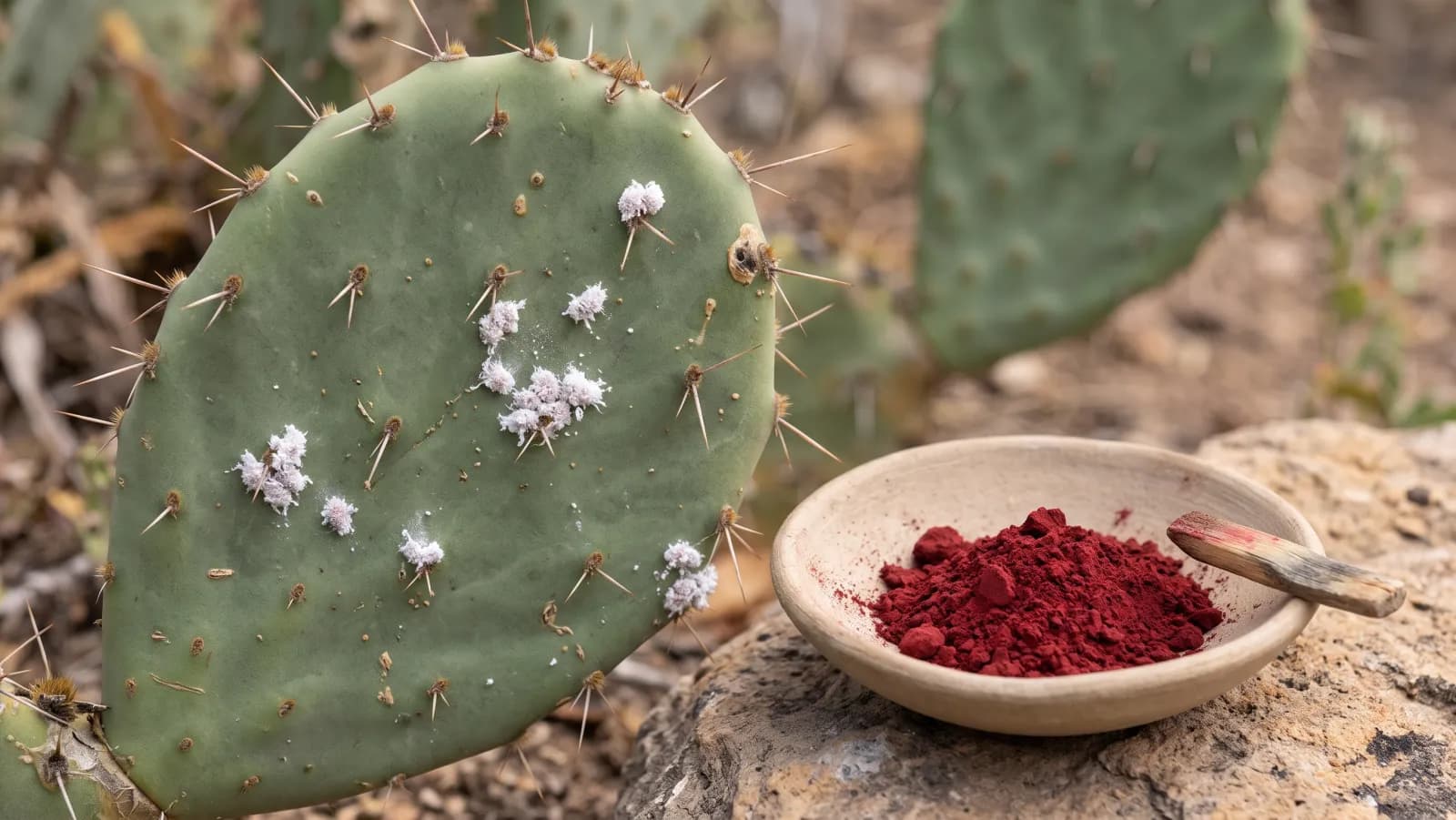
The Insect in Your Strawberry Yogurt
If your strawberry yogurt looks brighter than the strawberries it claims to contain, there's a good chance you're looking at carmine: a brilliant red dye made from the crushed bodies of Dactylopius coccus, a small scale insect that lives on prickly pear cacti in Central and South America.
It takes roughly 70,000 insects to produce one pound of carmine dye. It's been used as a colorant for centuries (the Aztecs were paying tribute in cochineal long before European contact) and it's still in extremely wide use today, across food, cosmetics, and pharmaceuticals, because it's a natural, light-stable red that no synthetic alternative has fully matched.
It's also one of the most-overlooked non-vegan ingredients on the planet. Carmine can also cause allergic reactions in some people, which is one reason US rules require it to be named on food and cosmetic labels.
Carmine isn't hidden because it's controversial. It's hidden because most people never think to look for it.
Where It Hides
Carmine shows up in surprising places. Some of the most common:
Food & drink:
- Strawberry, raspberry, and cherry yogurts
- Pink grapefruit juice and "natural red" beverages
- Red and pink candy (especially gummy bears, hard candy)
- Maraschino cherries
- Some red velvet cake mixes
- Surimi (imitation crab, for the red coloring)
- Red-colored alcoholic drinks (Campari historically used carmine; check current formulation)
- Some "natural" red sodas
Cosmetics:
- Red and pink lipsticks (especially long-lasting / mattes)
- Blushes
- Eye shadows in red/pink/coral tones
- Some nail polishes
Other:
- Pink-coated pills
- Some shampoos and soaps with pink coloring
- Pet food (some red-tinted varieties)
What It's Called on Labels
Carmine has at least seven aliases on different labels. All of these are the same insect-derived ingredient:
| Name on label | Where you'll see it |
|---|---|
| Carmine | US food, cosmetics |
| Cochineal | US food, sometimes called "cochineal extract" |
| Cochineal extract | US food (often interchangeable with carmine) |
| Natural Red 4 (CI 75470) | Color Index name for carmine, sometimes on cosmetic and imported labels |
| E120 | EU food (mandatory designation) |
| CI 75470 | Cosmetics (Color Index: global cosmetic naming) |
| Crimson Lake | Older / artisan products |
Natural Red 4 (CI 75470) is carmine. FD&C Red No. 4 (CI 14700) is not. FD&C Red No. 4 is a synthetic dye with nothing from an animal in it. US rules allow it only in some cosmetics and externally applied drugs, never in food and never on lips or eyes, so you will not find it in a lipstick. Animal testing is a separate question: we show a Cruelty-free chip only where we have confirmed the brand on Leaping Bunny or PETA's list.
The most-common bait-and-switch: a product labeled "naturally colored" or "no artificial colors" with carmine in the ingredient list. Carmine is a natural color, just an animal-derived one.
→ See our Reading Labels guide for the full list of hidden animal ingredients beyond carmine.
Why It's Used (and Why That Matters)
The blunt answer: synthetic red dyes are losing public trust faster than the food industry can find natural alternatives.
Red 40 (Allura Red) and other synthetic reds face growing regulatory and shopper pushback. As food brands shift toward "natural colors," carmine has been the go-to replacement because it's:
- Genuinely natural (technically true)
- Light-stable (doesn't fade in display lighting)
- Heat-stable (survives pasteurization)
- pH-stable (works in acidic environments like yogurt)
- Cheap (relative to other "natural" reds)
The unintended consequence: the move toward "natural colors" has increased the use of carmine across the food and cosmetics industries, making it harder than it was a decade ago to find vegan-friendly red products.
The Vegan Alternatives
Multiple plant-derived red and pink colorings exist. None are as light-stable as carmine, but for most products they're plenty good:
| Alternative | Source | Color produced | Best in |
|---|---|---|---|
| Beet powder / beet juice | Beets | Pink to deep magenta | Cake, smoothies, snacks |
| Hibiscus extract | Hibiscus flowers | Pink to ruby red | Drinks, frostings |
| Paprika oleoresin | Paprika peppers | Orange-red | Savory snacks, sauces |
| Annatto | Achiote tree seeds | Yellow-orange to red | Cheese alternatives, snacks |
| Lycopene | Tomatoes, watermelon | Pink-red | Sauces, supplements |
| Anthocyanins | Various berries, purple carrot | Red to purple | Beverages, candy |
Vegan-certified brands almost always use beet, hibiscus, or anthocyanin-based colorings for red and pink products.
What We Stock on Fondbloom
Every product we carry passes our vegan check, on its listed ingredients or the brand's written statement, so none contains carmine, cochineal, Natural Red 4 (CI 75470) or E120.
This rules out a surprising amount of "natural" mainstream product, which is part of why our food and beauty selections are smaller and more curated than a typical marketplace.
→ Browse vegan products on Fondbloom.
By The Numbers
70,000 insects per pound of carmine dye
7 different label names for the same ingredient (carmine, cochineal, cochineal extract, Natural Red 4, E120, CI 75470, crimson lake)
0 Fondbloom products list carmine (our vegan check reads every listed ingredient)
6 common vegan alternatives (beet, hibiscus, paprika, annatto, lycopene, anthocyanins)
~5 centuries of recorded use: predates synthetic dyes by hundreds of years
What to Watch For
When checking a label for carmine, run this 3-second scan:
- Look for the word "red" anywhere in the ingredient list. If you see "Natural Red 4 (CI 75470)", that's carmine. "FD&C Red No. 4 (CI 14700)" is a synthetic dye with no animal source, and it is not allowed in food or lip products.
- Look for "E120" in EU-labeled products.
- Look for "CI 75470" in cosmetics.
- Look for the literal words "carmine" or "cochineal" or "cochineal extract". Manufacturers don't have to euphemize, but increasingly they do.
If you don't see any of those, it very likely has no carmine. The other ~10 hidden animal ingredients (lanolin, casein, gelatin, etc.) are covered in Reading Labels: Ingredient Codes.
Build Your Routine: Editor's Picks
Carmine-free swaps for the most common offenders:
| Pick | Why | Link |
|---|---|---|
| Vegan red lipstick | Lipstick is the #1 cosmetic source: easy first swap | Shop vegan lipstick |
| Beet-colored snacks | Beet powder is the most common carmine alternative | |
| Hibiscus tea + drinks | Brilliant red, no insects |
From our shelf: Red Apple Red Lipstick, Naughty Lipstick, Dolly Blush
Shop links open our live catalog. The shelf is small and growing, so some picks land as new brands do.
Related Guides
- Reading Labels: What Those Ingredient Codes Actually Mean
- Shea Butter vs. Lanolin: Why Your Moisturizer Matters
- How to Build a Plastic-Free Morning Routine
- Understanding Plant-Based Proteins: Pea, Soy, and Hemp Compared
More from the Knowledge Hub