Ingredient Deep-Dive
Shea Butter vs. Lanolin: Why Your Moisturizer Matters
What's Actually In That Tube
Before you can decide whether your moisturizer is vegan, you need to know what its base fat is. Two of the most common moisturizing fats in skincare are shea butter (plant-derived) and lanolin (animal-derived). On the skin, they do similar work: soften, seal in moisture, calm dryness. In origin, they're nothing alike.
This guide explains where each comes from, why they show up in different products, and which one you'll find in any product on Fondbloom.
The texture is the same. The ethics aren't. That's the entire deep-dive.
Lanolin: What It Actually Is
Lanolin is the wax-like grease secreted by sheep's skin to keep their wool waterproof. It's harvested by chemically washing sheared wool. The lanolin floats off as a yellow waxy substance and is refined into the smooth, near-odorless balm you'd find in a tube of nipple cream or ultra-rich lip balm.
Where it shows up:
- Lip balms (especially "ultra-moisturizing" ones)
- Nipple creams (Lansinoh and similar)
- Hand creams and cuticle balms
- Some cold creams and barrier ointments
- Vitamin D3 supplements (D3 is most often derived from lanolin, see our Reading Labels guide for details)
Why it works on skin: Lanolin closely mimics the natural sebum your skin produces. It's an excellent occlusive and emollient (locks in moisture and softens). For pure skin-feel performance, it's hard to beat.
The vegan issue: Sheep are sheared annually for wool, and lanolin is a byproduct of that process. Whether wool itself is "ethically harvested" is its own debate (most commercial wool comes from large-scale operations with mulesing and other welfare concerns); whether lanolin specifically is acceptable depends on where you draw your line. Most vegan and vegan-aligned shoppers don't accept lanolin under any circumstances.
It's also commonly mislabeled or hidden under the names: lanolin alcohol, lanolin wax, wool wax, wool grease, anhydrous lanolin, hydrogenated lanolin, E913.
Shea Butter: What It Actually Is
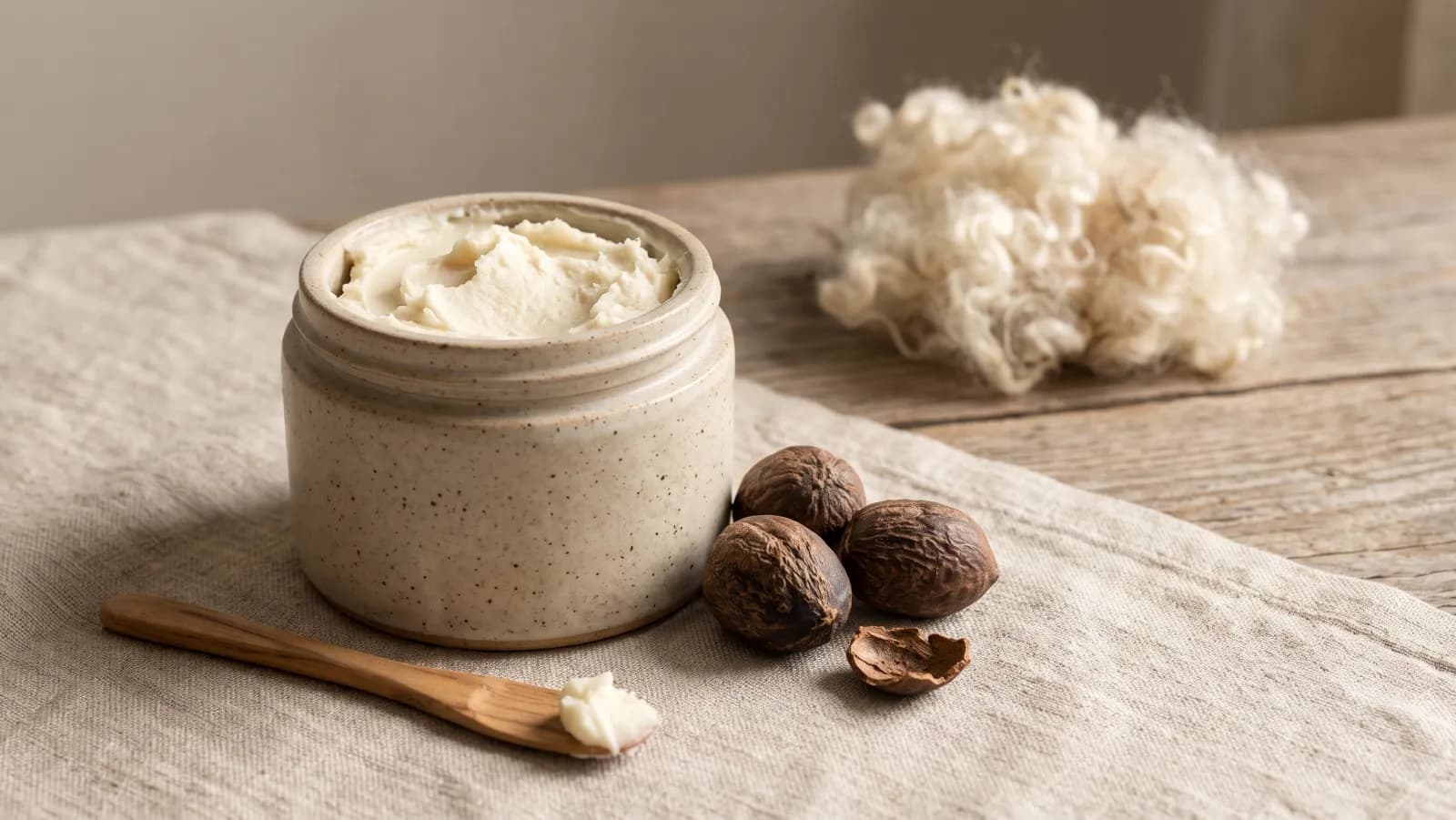
Shea butter is a fat extracted from the nut of the African shea tree (Vitellaria paradoxa), which grows across the West African savannah from Senegal through Sudan. The nuts are gathered, cracked, roasted, ground into a paste, and slowly churned with water until the fat separates and floats, a process traditionally done by hand and largely still done by women's cooperatives across Burkina Faso, Ghana, Mali, and Côte d'Ivoire.
Where it shows up:
- Body butters and moisturizers
- Lip balms (the vegan ones)
- Conditioner bars (cream + grip in one ingredient)
- Body balms
- Solid skincare bars (see our Plastic-Free Morning Routine guide, Step 5)
Why it works on skin: Shea butter is rich in fatty acids (oleic, stearic, linoleic) and naturally contains vitamin A and E. It's an excellent emollient and mild occlusive, slightly less heavy-feeling than lanolin but very close in moisturizing performance.
The two grades:
- Refined shea butter: bleached, deodorized, longer shelf life, lighter color and feel. Most mass-market products use this.
- Unrefined (raw) shea butter: yellow-cream color, nutty smell, retains more vitamins and natural compounds. Used in higher-end and small-batch products.
The ethical asterisk: Shea has its own supply-chain concerns: much of the global supply has historically been bought below fair-trade prices from women's cooperatives. Look for Fair Trade certification or "women's cooperative sourced" labeling.
Side-by-Side: How They Compare
| Property | Lanolin | Shea Butter |
|---|---|---|
| Source | Sheep wool grease | African shea tree nut |
| Vegan? | NO | YES |
| Animal source? | Yes (sheep) | No |
| Texture | Waxy, slightly sticky | Buttery, melts on skin |
| Occlusive strength | Very high | Moderate-high |
| Allergy potential | Higher (a known skin allergen) | Low |
| Nut allergy concern? | No | Comes from a tree nut. Refined shea usually has very little of the protein that triggers allergy, but if you have a tree nut allergy, ask your allergist before using it. |
| Common in | Nipple cream, lip balm, ointments | Body butters, vegan lip balm, conditioner bars |
| Hidden names | E913, wool wax, lanolin alcohol | Karité butter, beurre de karité |
The performance gap between lanolin and a well-formulated shea butter product is small. The ethical gap is total.
Other Vegan Alternatives Worth Knowing
If you're checking labels and shea butter isn't there, these are also vegan-safe occlusive/emollient ingredients:
- Cocoa butter: heavier than shea, harder, melts at body temperature. Common in lip balms.
- Mango butter: lighter than shea, faster-absorbing.
- Coconut oil: divisive (some skin types break out from it). Excellent for hair and body, mixed for face.
- Jojoba oil: closest molecular match to human sebum among plant oils. Lightweight, doesn't go rancid quickly.
- Squalane (plant-derived, from olives): the vegan version of squalene (which is sometimes shark liver-derived). Lightweight, non-comedogenic.
If you see "squalene" without the "a", check the source: it can be either plant or shark. "Squalane" (the saturated, more stable version) can also come from either source, so look for "plant" or "olive" next to it.
What We Stock on Fondbloom
Every product we carry passes our vegan check, on its listed ingredients or the brand's written statement, so no moisturizer, balm or conditioner we sell contains lanolin.
For shea butter, look for brands that say where their shea comes from; some we carry name Fair Trade or women's cooperative sourcing.
→ Browse vegan moisturizers on Fondbloom.
By The Numbers
0 Fondbloom products list lanolin (our vegan check reads every listed ingredient)
Lanolin is a known skin allergen, so patch test first if your skin is sensitive
3 West African countries supply most of the world's fair-trade shea butter
2 main grades of shea butter: refined (most products) vs. unrefined (small-batch)
6 common vegan alternatives if shea isn't on the label (cocoa butter, mango butter, coconut oil, jojoba, squalane, plant-derived glycerin)
What to Watch For When Reading Labels
- "Lanolin alcohol" in lip balms: counts as lanolin even though "alcohol" sounds plant-derived
- "Vitamin D3" in supplements or fortified milks: almost always lanolin unless specifically labeled "vegan D3 from lichen" (see Reading Labels guide)
- "Wool wax": same thing as lanolin, less clinical-sounding name
- "Squalene" or "squalane": either can come from shark liver; look for "plant" or "olive"
- "Karité butter": French for shea butter, still vegan, just translated
Build Your Routine: Editor's Picks
Lanolin-free, shea-forward picks for the basics:
| Pick | Why | Link |
|---|---|---|
| Vegan lip balm with shea or cocoa butter | The single most common product to contain lanolin: easy first swap | Shop vegan lip balms |
| Body butter (Fair Trade shea) | Heavy-duty winter skin moisturizer | Shop body butters |
| Solid moisturizer bar | Shea + cocoa butter, plastic-free packaging | Shop solid skincare |
From our shelf: ELEVATED - PUCKER! Natural Lip Balm * ECO Tube / Key Lime, Unscented Body Butter for Sensitive Skin, Lavender Chai Organic Lotion Bar
Shop links open our live catalog. The shelf is small and growing, so some picks land as new brands do.
Related Guides
- Reading Labels: What Those Ingredient Codes Actually Mean
- How to Build a Plastic-Free Morning Routine
- Why Vegan? Bamboo vs Plastic: The Hidden Microplastic Crisis
- What Is Carmine (E120) and Why We Don't Carry It
- Understanding Plant-Based Proteins: Pea, Soy, and Hemp Compared
More from the Knowledge Hub