Ingredient Deep-Dive
Understanding Plant-Based Proteins: Pea, Soy, and Hemp Compared
The Protein Question (Reframed)
If you've eaten plant-based for more than a week, someone has asked you "where do you get your protein?" The honest answer is: mostly from food, not from powders. Beans, lentils, tofu, tempeh, edamame, nuts, seeds, and even broccoli all contribute meaningful protein. For most adults eating enough food, protein is not a bottleneck.
But protein powders are useful: for athletes, for older adults, for people in calorie deficits, for anyone trying to hit a specific gram target without eating six meals a day. And here, the choice between pea, soy, and hemp matters more than most people realize.
This guide breaks each one down: where it comes from, what it tastes like, what it's good for, and where it falls short.
You don't need a protein powder to be healthy. But if you're using one, choose deliberately.
The Quick "Complete Protein" Myth
Before getting into specifics: the idea that plant proteins are "incomplete" is mostly outdated. All three proteins below contain all 9 essential amino acids. The question is the ratio, not whether they're present.
Older nutrition writing said vegans needed to combine grains and legumes at every meal to get a "complete protein" (e.g. rice + beans). This was based on a 1970s simplification that's been retired by major nutrition bodies since. Your body pools amino acids over the course of a day, not per-meal. Eat varied plant protein over the day → you're complete.
That said, the profile of each protein matters for specific use cases (muscle building, recovery, satiety). Below.
Pea Protein (Pisum sativum)
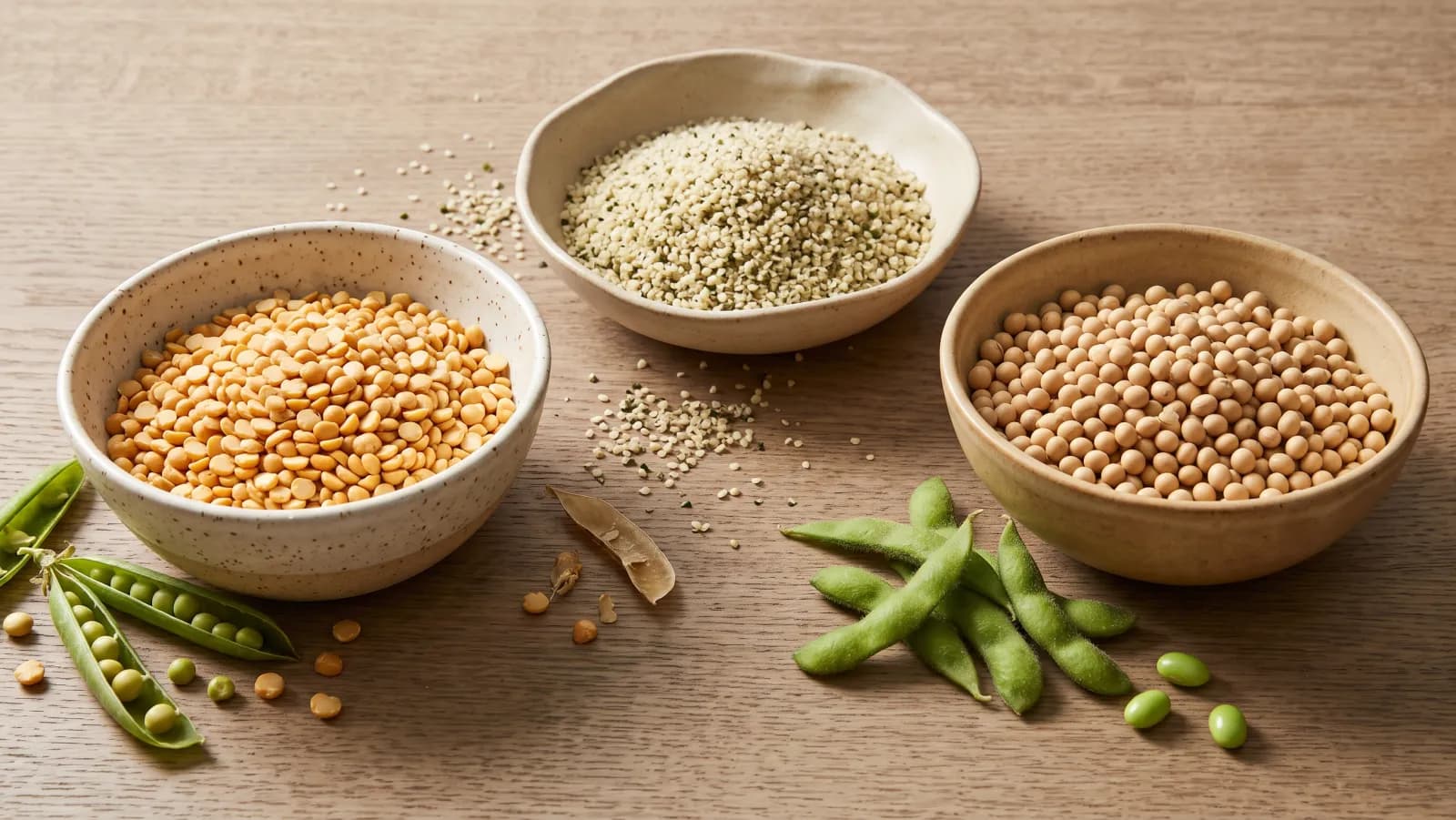
Where it comes from: Yellow split peas, ground and processed to isolate the protein. Largely produced in Canada, France, and China.
Protein content: ~80% by weight in isolate form (one of the highest plant-protein concentrations available).
Amino acid profile: Strong in BCAAs (especially leucine, the muscle-protein synthesis trigger). Limiting amino acids: methionine and cysteine (lower than soy or animal proteins, but still present).
Taste: Slightly earthy, neutral. Easy to mask with cocoa, fruit, or vanilla.
Texture: Smooth when blended; can be slightly chalky if just stirred into water.
Allergens: Not one of the 9 major US allergens. Pea allergy is uncommon but real, and people allergic to peanut can react to pea, since both are legumes.
Best for:
- Strength training (rich in leucine; soy and whey work well too)
- Smoothies and shakes
- Baking (substitutes well in pancakes, muffins)
- People avoiding soy
Watch out for: Cheap pea protein blends with added gums, sucralose, and "natural flavors" that may not be vegan. Look for single-ingredient pea isolate when possible.
Soy Protein (Glycine max)
Where it comes from: Soybeans, processed into isolates or concentrates. Most US soy is GMO unless specifically labeled organic or non-GMO.
Protein content: ~90% by weight in isolate form (the highest concentration of the three).
Amino acid profile: The most "complete" plant protein of the three. On DIAAS, the newer protein quality score the FAO recommends, soy isolate scores higher than pea, and pea higher than hemp. Its amino acid ratios are close to animal-protein references.
Taste: Slightly beany; less neutral than pea but more familiar to most palates.
Texture: Very smooth when blended; mixes well in liquid.
Allergens: Soy is one of the 9 major allergens in the US. Soy allergy is most common in young children, and many outgrow it. Skip if you're allergic.
Best for:
- Anyone who wants a single-source, complete plant protein
- Older adults (recovery + muscle preservation)
The phytoestrogen question: Soy contains isoflavones, which are weak phytoestrogens. Most research on moderate soy food in adults is reassuring, including reviews that found no change in men's hormone levels. Older fears came largely from rodent studies. If you have a hormone related condition, ask your doctor.
Watch out for: GMO sourcing if you avoid GMO. Look for organic, non-GMO, or USDA Organic certified soy products.
Hemp Protein (Cannabis sativa)
Where it comes from: Hemp seeds (from hemp grown for very low THC), cold-pressed and ground.
Protein content: ~30 to 50% by weight in concentrate form. Lowest of the three, but with major nutritional offsets (fiber, omega-3s, minerals).
Amino acid profile: Complete (all 9 essential amino acids present), but lower in lysine than soy or pea. Best when paired across the day with lysine-rich foods like lentils, beans, or quinoa.
Taste: Distinctly nutty and grassy. Polarizing: some people love it, others find it overpowering. Best masked in chocolate-flavored or strongly-flavored smoothies.
Texture: Coarser than pea or soy, closer to a ground seed than a fine powder.
Allergens: Not one of the 9 major US allergens. Hemp allergy is uncommon but has been reported.
Bonus nutrition:
- ~8g of fiber per serving (pea/soy isolates have ~0g)
- Omega-3 ALA (rare in protein powders)
- Magnesium, iron, zinc
- Keeps its natural fiber (no isolation step strips it)
Best for:
- People who want a whole-food protein, not an isolate
- More fiber per scoop
- Smoothies with strong flavors that hide hemp's grassiness
- People avoiding soy AND pea (rare but real)
Watch out for: Hemp protein is often more expensive per gram of protein. If maximum protein per dollar is the goal, soy or pea win.
Side-by-Side: Quick Comparison
| Feature | Pea | Soy | Hemp |
|---|---|---|---|
| Protein per serving | ~25g | ~25g | ~15g |
| Concentration | ~80% | ~90% | ~30 to 50% |
| Complete? | Yes (low in methionine) | Yes (most balanced) | Yes (low in lysine) |
| Fiber per serving | ~1g | ~1g | ~8g |
| Taste | Earthy, mild | Beany, familiar | Nutty, grassy |
| Allergen risk | Not a major US allergen | Major US allergen | Not a major US allergen |
| Best for | Muscle building, baking | All-purpose, complete | Whole-food, digestion |
| Cost per gram protein | $$ | $ | $$$ |
What About Other Plant Proteins?
Beyond the big three, a few worth knowing:
- Brown rice protein: often blended with pea (the two are nutritionally complementary). Lower leucine than pea alone.
- Fava bean protein: newer category, similar profile to pea.
- Pumpkin seed protein: high in zinc and magnesium, distinct flavor.
- Sunflower seed protein: increasingly common in allergen-friendly blends.
- Quinoa protein: uncommon as an isolate, but quinoa as a whole grain is itself a complete protein.
The most common "premium" vegan protein blend you'll see on shelves is pea + brown rice. Pea is low in methionine and high in lysine; rice is the other way round. Blended, they score close to soy, at a relatively low cost.
How to Choose
Default pick: pea. Best balance of protein content, taste neutrality, and price. Works for almost everyone.
Choose soy if: you want the most complete amino profile, you're an older adult, you're not allergic, and you're comfortable with a slightly more pronounced flavor.
Choose hemp if: you want whole-food benefits (fiber, omega-3s, minerals), you don't mind the taste, and the cost works for your budget.
Choose a blend (pea + rice or pea + hemp) if: you want broader nutritional coverage in one scoop.
By The Numbers
3 of the most common vegan protein powders: pea, soy and hemp
1 of the three is a major US allergen: soy
~25g of protein per typical serving for pea or soy isolate
~15g of protein per serving for hemp, but with ~8g fiber and omega-3s
9 essential amino acids: all three plant proteins above contain all of them
What to Watch For on Labels
- "Natural flavors": could be plant or animal-derived; the label alone does not say. Ask the brand. (See Reading Labels guide.)
- Whey, casein, lactose: non-vegan; check carefully on "plant-based protein" blends that may not be fully plant
- Sucralose, aspartame, acesulfame potassium: vegan but artificial sweeteners; skip if you avoid them
- "Proprietary blend": means you can't see the actual gram breakdown of each protein source. Not a dealbreaker, but transparency-favoring brands list each protein with its gram amount
Build Your Routine: Editor's Picks
Single-source and blended options:
| Pick | Why |
|---|---|
| Pea protein isolate (single-ingredient) | Default everyday choice: good for muscle, smoothies, baking |
| Organic soy protein isolate | The most-complete amino profile in one scoop |
| Hemp protein (whole-seed) | Whole-food fiber + omega-3s alongside protein |
| Pea + brown rice blend | Best-balanced amino profile at a reasonable cost |
From our shelf: OnePot Kitchari Single Pack Ready-to-Cook Meals, Organic, Date Sweetened Dark Chocolate, Orange Blossom
Shop links open our live catalog. The shelf is small and growing, so some picks land as new brands do.
Related Guides
- Switching to Vegan: A 30-Day Guide for Beginners
- Reading Labels: What Those Ingredient Codes Actually Mean
- Shea Butter vs. Lanolin: Why Your Moisturizer Matters
- What Is Carmine (E120) and Why We Don't Carry It
More from the Knowledge Hub